
Home › Mobility › Walking with confidence
Walking with confidence
Walking is the foundation of independence. This guide explains which changes in walking are a normal part of ageing, which ones deserve attention, and how to build walking strength, endurance and confidence — indoors and out.
Written by Abhiraj Radhakrishnan, PT, MPT · 10-minute read
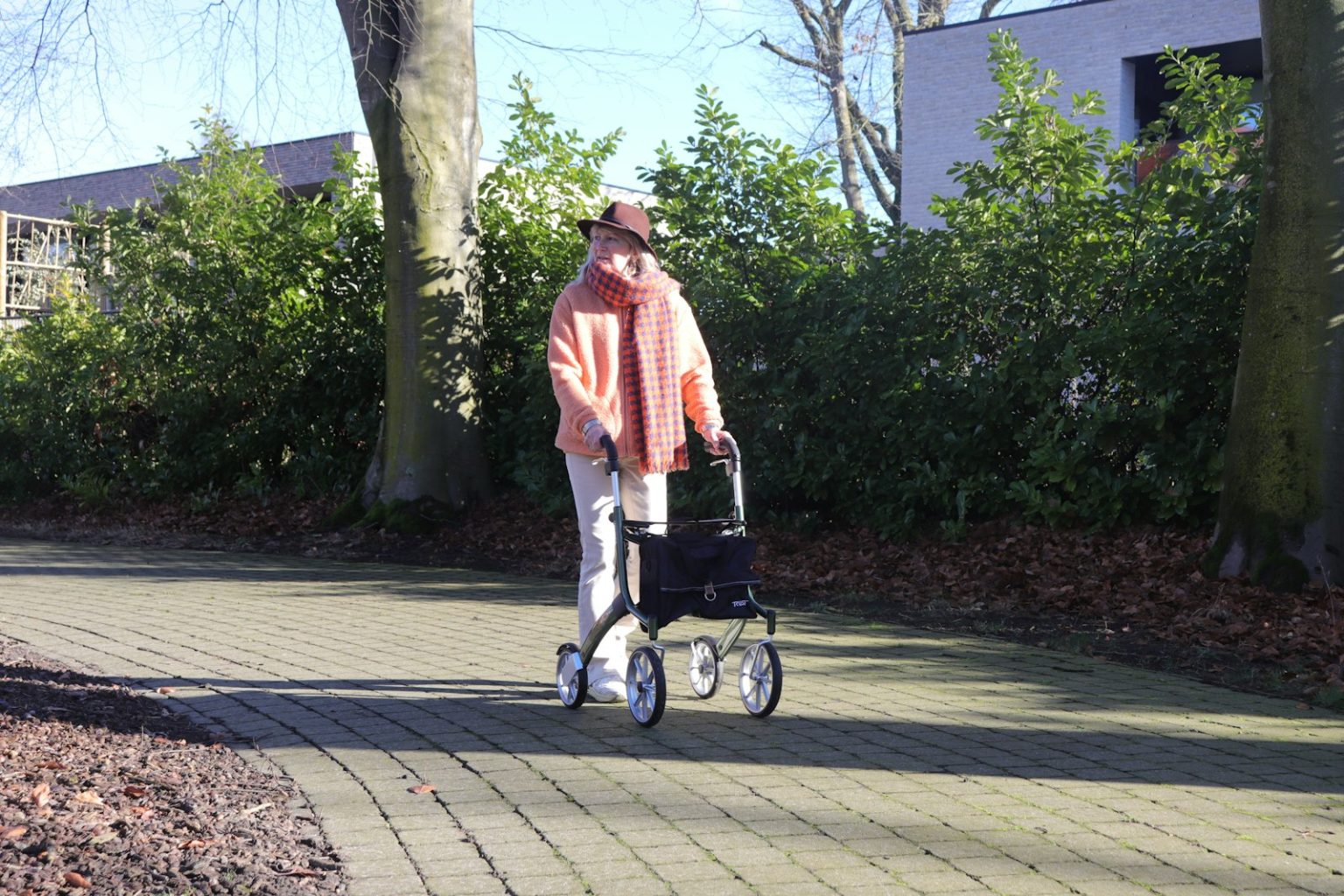
How walking changes with age
Most people walk a little more slowly as they get older, with slightly shorter steps. One reason is that the calf muscles produce less “push-off” at the ankle, so the hips have to do more of the work. A little extra caution on uneven ground is normal too.
Often a normal part of ageing
- Walking a little more slowly than before
- Slightly shorter steps
- Being more careful on ice, stairs or uneven ground
Worth getting checked
- Shuffling, or feet not clearing the ground
- A new limp, or favouring one side
- Walking that has changed suddenly
- Tripping or near-falls
- Needing to hold on to furniture or walls
Signs walking needs attention
Other signs to watch for:
- Walking more slowly than people of a similar age
- Shuffling, or a wider stance than before
- Holding on to furniture, walls or another person
- Stopping walking in order to talk
- Tripping, catching a toe, or near-falls
- Avoiding outings, stairs or walks they used to enjoy
- New pain, or a limp on one side
A note on shuffling and parkinsonism
Shuffling with small steps, less arm swing, trouble starting to walk or turning, or feet that seem to “freeze” to the floor can be signs of parkinsonism. Parkinson’s disease is one cause, but not the only one — some medications, small strokes and other conditions can cause a similar walking pattern.
If you notice these changes, talk to your family doctor. Finding the cause matters, because the right treatment and exercise approach depend on it.
Parkinson’s disease, parkinsonism and the full range of mobility challenges they bring deserve their own topic — we’ll cover them in a separate guide.
Walking speed: a window on health
Walking speed is one of the simplest and most useful measures of health in older adults. Walking draws on the heart, lungs, muscles, joints, nerves and balance all at once, so it reflects how well they are all working together.
A large study of nearly 35,000 older adults found that people who walked faster tended to live longer — each small step up in usual walking speed (0.1 metres per second) was linked with about a 12% lower risk of death over the following years.
The encouraging part: walking speed isn’t fixed. Strength training and walking practice can improve it, and a physiotherapist can measure it over time to track progress.
Building strength and endurance
Clearing the ground with your toes also depends on the muscles at the front of the shin and on bending at the hip and knee — so a balanced program works the whole leg. Strength training improves walking speed in older adults, and works best combined with walking practice and balance exercises.
Simple exercises that help walking
- Heel raises at the kitchen counter — for calf strength and push-off
- Sit to stand from a firm chair — for the thighs and hips
- Side stepping along the counter — for hip control
- Marching in place, holding the counter — for lifting the feet
Step-by-step instructions are in our balance exercises.
A gradual walking plan
- Start where you are. If 5 minutes is comfortable, start with 5 minutes — or several short walks a day.
- Add a little each week, such as 1 or 2 minutes per walk.
- Use the talk test. You should be able to talk, but not sing. That’s a healthy “moderate” effort.
- Plan rest stops, such as benches along your route.
- Aim, over time, for about 150 minutes a week of moderate activity, plus muscle-strengthening at least twice a week — as Canada’s movement guidelines for adults 65 and older recommend.
- On a bad day, walk less rather than not at all.
Stop and get medical help if you have chest pain, unusual shortness of breath, or feel faint while walking.
Walking safely outdoors and in winter
- Plan your route: even sidewalks, places to rest, and walking in daylight.
- Look ahead, not down at your feet — scan for curbs, cracks and changes in surface.
- On curbs and stairs, step up with your stronger leg first and down with your weaker leg first.
- Carry a phone, and let someone know where you’re going.
In winter
- Wear warm boots with a deep, slip-resistant tread and a low, wide heel.
- Ice grippers that strap over your boots can help: in a study of fall-prone older adults, those who wore them outdoors had about half as many outdoor falls. Take them off indoors — they are slippery on hard floors.
- Use an ice tip on your cane, and flip it up when you go inside.
- On slippery ground, take short, flat-footed steps with your knees slightly bent — “walk like a penguin”.
- Keep your walkways salted or sanded, and ask for help clearing snow.
- On icy days, walk indoors instead — many shopping malls and community centres welcome walkers.
Footwear
- A closed back and a firm heel that holds your foot in place
- A thin, non-slip sole — so you can feel the ground — and a low, wide heel
- Secure fastening, such as Velcro or laces, that you can do up easily
- A good fit, with room for swelling if your feet swell during the day
Avoid walking in socks, loose slippers or backless shoes. If you have foot pain, corns, numbness or changes in your feet, see your doctor or a foot specialist (a chiropodist or podiatrist).
Walking with a cane or walker
Cane tips
- Move the cane forward at the same time as your weaker leg.
- Height: with your arm hanging down, the handle should be level with the crease of your wrist. Your elbow should bend slightly when you hold it.
- Replace a worn rubber tip.
- On stairs: up with the stronger leg, down with the weaker leg, and use the handrail.
Walker and rollator tips
- Walk “inside” the walker — don’t push it too far ahead of you.
- Turn with small steps, turning the walker with you, rather than twisting.
- Approach doorways straight on, and go through slowly.
- Lock the brakes on a rollator before you sit on it or stand up from it.
- Never let someone push you while you sit on a rollator — it isn’t a wheelchair.
- Don’t use a walker on stairs.
Not sure which aid is right? Read Cane or walker? or try the walking aid helper. A physiotherapist can check the height and show you how to use it.
When to get help
- Sudden change in walking, weakness on one side, a drooping face or trouble speaking — call 911. These can be signs of a stroke.
- A fall or several near-falls
- Pain that limits how far you can walk
- Walking that is getting steadily slower or harder
- Feeling dizzy or unsteady when walking
Ask your family doctor about a physiotherapy assessment, or contact Ontario Health atHome at 1-833-515-1234.
Have a question about walking?
Send it in — common questions are answered here on the site.
Sources
Studenski S, et al. Gait speed and survival in older adults — JAMA, 2011
DeVita P, Hortobágyi T. Age causes a redistribution of joint torques and powers during gait — Journal of Applied Physiology, 2000
Liu CJ, Latham NK. Progressive resistance strength training for improving physical function in older adults — Cochrane Database of Systematic Reviews, 2009
McKiernan FE. A simple gait-stabilizing device reduces outdoor falls and nonserious injurious falls in fall-prone older people during the winter — Journal of the American Geriatrics Society, 2005
Bradley SM, Hernandez CR. Geriatric assistive devices — American Family Physician, 2011
Canadian 24-Hour Movement Guidelines for Adults aged 65 years and older — CSEP
This guide is general information, not a personal assessment. Check with your doctor before starting a new exercise program, especially if you have heart or lung problems or have fallen.