Home › Falls & balance › Fall prevention
Fall prevention
Falls are the leading cause of injury-related hospital stays for older Canadians — but many falls can be prevented. This guide covers the warning signs, the most common risks, and what you can do about them.
Written by Abhiraj Radhakrishnan, PT, MPT · 8-minute read
What counts as a fall?
A fall is any time you end up on the floor or a lower surface without meaning to — even if you weren’t hurt, and even if you “just slid down” from a chair or bed. A near-fall is a slip, trip or loss of balance where you caught yourself on furniture, a wall or another person.
Why near-falls matter
Near-falls are an early warning. They often mean balance, strength or reaction time has started to change. Many people don’t mention them because nothing “happened” — but they are one of the best reasons to get checked before a fall does happen.
Tip: Keep a simple note of any falls or near-falls — when, where and what you were doing. It’s very helpful for your doctor or physiotherapist.
Common risk factors
Most falls have more than one cause. The good news is that many of them can be changed.
Your body
Weak legs, poor balance, slower walking, foot pain, changes in vision.
Your health
Dizziness, low blood pressure on standing, some medications, recent illness.
Your surroundings
Clutter, loose rugs, poor lighting, stairs without rails, ice outdoors.
Your habits
Rushing to the bathroom, unsupportive slippers, not using a prescribed aid.
If you take several medications or feel dizzy, ask your pharmacist or doctor for a medication review.
How physiotherapy helps
Exercise that challenges balance and builds leg strength is one of the most effective ways to reduce falls. A physiotherapist can:
- Test your balance, strength and walking to find what’s driving your risk
- Build a home exercise program that is safe for you and that progresses over time
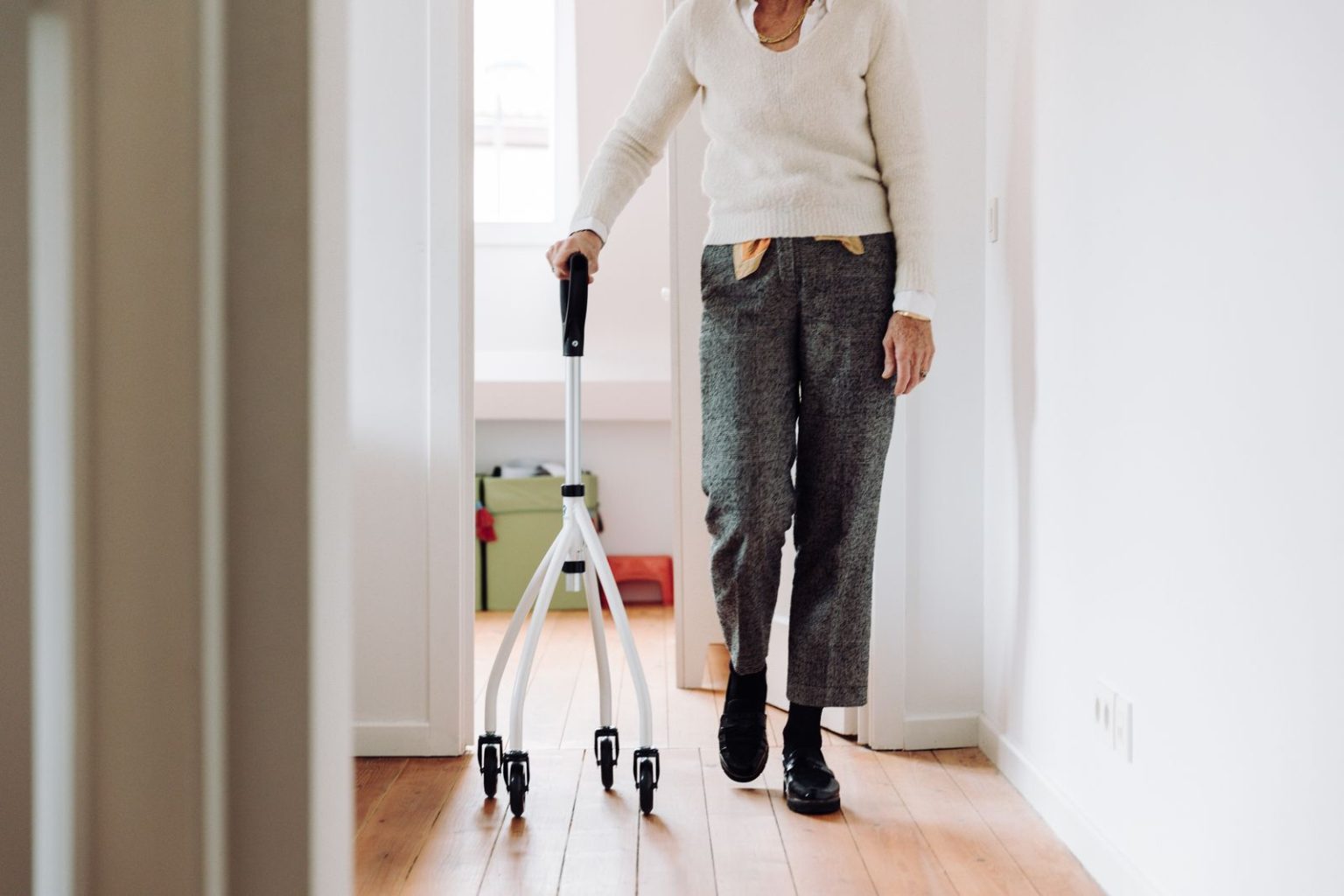
- Check whether a cane, walker or rollator would help — and set it to the right height
- Practise safe ways to get up from a chair, bed, toilet or the floor
What the evidence says: for people living at home, exercise has the strongest evidence of any single step — about 23% fewer falls overall, and around a third fewer with programs that combine balance, functional and strength training. Hip protectors probably reduce hip fractures slightly in care homes, but show little benefit at home and are often not worn. Low beds and floor mats have limited evidence and aim to reduce injury rather than falls. Restraints and full bed rails are not recommended — they don’t prevent falls and can cause serious harm.
[PHOTO or SHORT VIDEO: a sit-to-stand exercise with a sturdy chair]
Hazards around the home
A quick walk-through of your home can remove a lot of risk:
- Remove loose rugs and keep walkways clear of cords and clutter.
- Add night lights between the bedroom and bathroom.
- Install grab bars by the toilet and in the tub or shower.
- Make sure stairs have sturdy railings on both sides and good lighting.
- Keep everyday items within easy reach, between waist and shoulder height.
Get the full room-by-room home safety checklist →
Footwear and mobility aids
Wear well-fitting shoes or slippers with a closed back and a non-slip sole, indoors and out. If you’ve been given a cane or walker, use it every time — including short trips at night. An aid that is the wrong height or in poor repair can increase your risk, so have it checked if you’re unsure.
Signs for families to watch
- New bruises, or furniture being used as a handrail
- Walking more slowly, shuffling, or stopping to rest more often
- Trouble getting up from a chair or the toilet
- Giving up activities, outings or stairs they used to manage
Tell the family doctor about any fall or near-fall, even without injury. Current international guidelines recommend a falls assessment for anyone who has fallen in the past year or is worried about falling.
If a fall happens
Call 911 if the person hit their head, is in severe pain, can’t move a limb, is confused, or cannot get up. Stay with them, keep them warm, and don’t try to lift them.
Lying on the floor for a long time — an hour or more — can lead to dehydration, pressure sores, muscle breakdown and chest infections. Many older adults who fall can’t get up on their own, so having a plan matters.
If you fall
- Stay still for a moment. Breathe, calm yourself and check for pain.
- If you are hurt or can’t move a limb, don’t try to get up. Call for help — 911, a personal alarm, or a phone kept within reach. Keep warm with whatever is nearby, and change position gently every so often.
- If you are not hurt, roll onto your side, then come up onto your hands and knees.
- Crawl to a sturdy chair or bed. Place your hands on the seat.
- Bring your stronger leg forward with that foot flat on the floor. Push up with your arms and leg, then turn and sit. Rest before you stand.
- Tell your doctor about the fall, even if you feel fine.
If you are helping someone
- Don’t lift them. Lifting risks injuring both of you.
- Coach them through the steps above, and bring a sturdy chair close.
- If they can’t get up, keep them warm and comfortable and call for help.
Tip: Practise getting down to the floor and back up before you need it, with a physiotherapist. A personal alarm with fall detection can also help avoid a long lie.
[ILLUSTRATION: 4 steps to get up from the floor safely]
Have a question about falls or mobility?
Send it in. Common questions are answered here on the site.
Sources
Sherrington C, et al. Exercise for preventing falls in older people living in the community. Cochrane Database Syst Rev 2019.
Montero-Odasso M, et al. World guidelines for falls prevention and management for older adults. Age Ageing 2022.
Robinovitch SN, et al. Video capture of the circumstances of falls in elderly people residing in long-term care. Lancet 2013.
Santesso N, et al. Hip protectors for preventing hip fractures in older people. Cochrane Database Syst Rev 2014.
Public Health Agency of Canada. Seniors’ Falls in Canada: Second Report. 2014.
Fleming J, Brayne C. Inability to get up after falling, subsequent time on floor, and summoning help. BMJ 2008.
This guide is general information and not a substitute for an individual assessment. Check with your doctor before starting a new exercise program.