
There are several reasons why some people may have difficulty losing their forward projected belly, also known as a "pooch" or "mommy tummy," despite following an abs workout:
-
Poor diet: Exercise alone may not be enough to achieve your desired results. It's important to focus on eating a healthy, balanced diet that is low in added sugars and unhealthy fats.
-
Lack of consistency: To see results from any exercise program, it's important to be consistent and stick to a regular routine. If you are only doing abs workouts occasionally or skipping workouts, you may not see the results you desire.
-
Lack of variety: Doing the same abs exercises repeatedly can lead to muscle adaptation, which can reduce the effectiveness of the workouts. Try incorporating a variety of exercises and using different techniques to challenge your muscles and keep them guessing.
-
Underlying medical conditions: In some cases, a forward projected belly may be caused by underlying medical conditions such as a hernia or hormonal imbalances. If you have any concerns or underlying health conditions, it's important to consult with a healthcare professional before starting any exercise program.
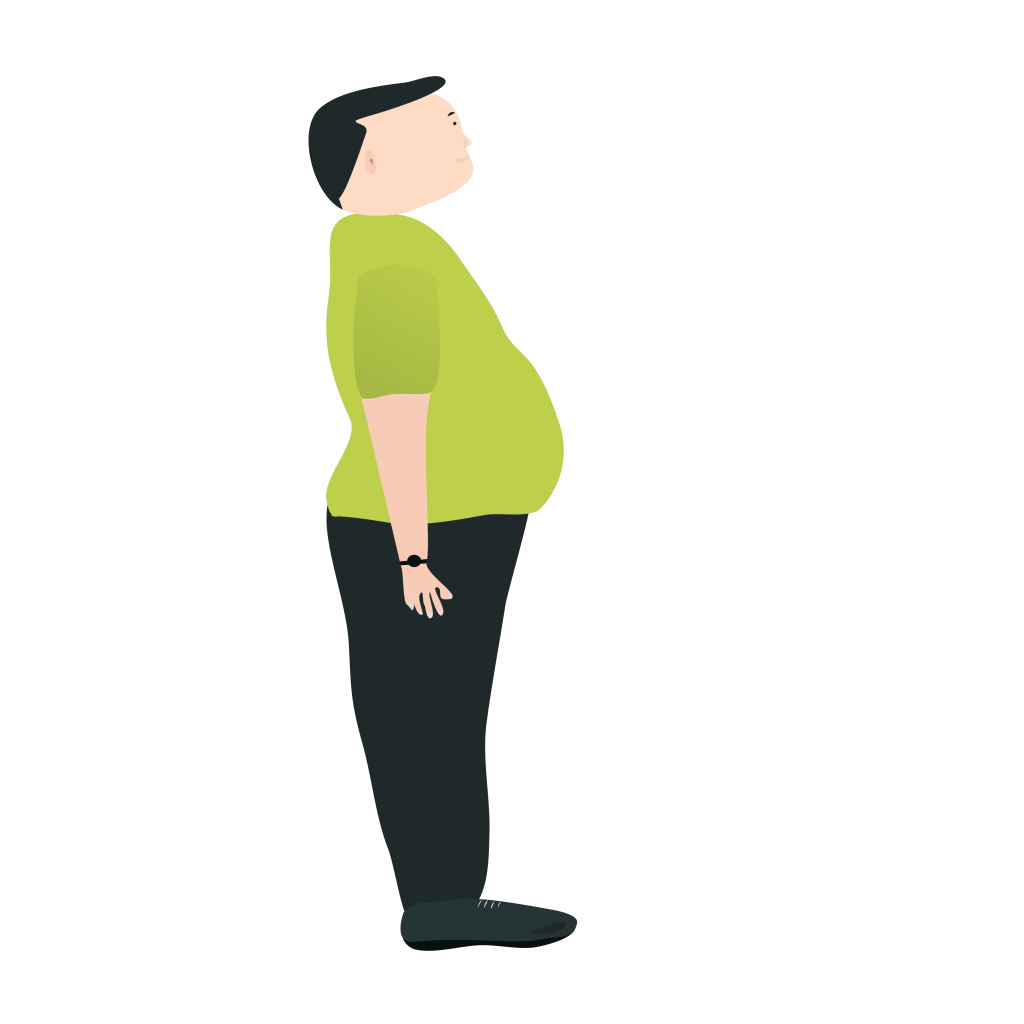
- Poor posture: Poor posture can contribute to a forward projected belly by causing the abdominal muscles to weaken and the spine to curve forward. Focus on maintaining good posture throughout the day and incorporating exercises that strengthen the muscles in your back and core.
Abdominal muscle weakness
Increased lordosis, or the appearance of a large belly due to weak abs and a forward-shifted spine, is a common problem that can be caused by a sedentary lifestyle, a sitting job, or obesity. If left uncorrected, increased lordosis can cause back pain and discomfort, and can affect a person's overall appearance and self-confidence.
It is common for the transverse abdominis (TVA) and other core muscles to weaken with age. This can be due to a variety of factors, including a decrease in physical activity, changes in body composition, and the natural aging process. A weak TVA can contribute to poor posture and an increased risk of falls, as well as back pain and other musculoskeletal issues.
Fortunately, it is never too late to start strengthening the TVA and other core muscles. Engaging in regular exercise that targets these muscles can help to improve core stability and strength, which can in turn help to improve posture and reduce the risk of falls and other musculoskeletal issues.
Common Mistakes to Avoid
-
Skipping warm-up and cool-down stretches: It's important to stretch before and after your workout to prevent injury and improve flexibility.
-
Doing the same exercises every day: Your muscles need time to rest and recover between workouts, so be sure to mix up your routine.
-
Doing exercises that put too much strain on the low back: Avoid exercises that involve heavy weights or require you to round your back.
-
Not paying attention to form: Proper form is crucial to getting the most out of your exercises and avoiding injury. Be sure to keep your core engaged and maintain good posture.
Avoid sit ups
Doing sit up exercise is a common mistake everyone does when starting an abdominal program. Sit ups are neither suitable for beginners nor for people with big belly. Weak abdominal muscles won't be able to produce enough force needed for this movement, so instead of recruiting (effectively using) abdominal muscles, there is a high chance that hip flexors will substitute for this action and this may result in an even more lordosis - the condition where the front curvature of lower back is exaggerated with the added pull of tight hip flexor muscles and this may cause low back pain especially if you are older.
The transverse abdominis (TVA) is a deep layer of muscle that is located within the abdominal wall and is important for core stability and strength. The TVA is a corset-like muscle that wraps around the waist and helps to support the spine and pelvis. It works in conjunction with other muscles in the abdominal wall and the back to help maintain good posture and stability.
The TVA can be trained through specific exercises that target this muscle group but effective activation and feeling the TRV working is the first step
Activating the transverse abdominis (TVA) muscle is an important aspect of maintaining good core stability and strength. Here is a summary of the steps you can follow to effectively activate the TVA in all four position:
To assume the position of all fours (also known as the quadruped position), you can follow these steps:
-
Start by sitting on your knees, with your knees shoulder-width apart.
-
Place your hands on the ground in front of you, with your hands shoulder-width apart.
-
Extend your arms and lift your hips up, so that you are in a position similar to a cat stretching.
-
Keep your core engaged and maintain a neutral arch in your spine.
Now you can lift one arm up and hold it for 5 seconds and repeat on the other side. You can perform this exercises for 10 repititon and do 3 sets.
The all fours position is a great starting point for many exercises that target the transverse abdominis (TVA) and other core muscles. Just make sure to maintain proper form and to engage your core throughout the exercise to get the most out of your workouts. Once you get proper activation you can try doing the same exercise in different positions
-
positions like(standing, sitting, lying on your back, or lying on your stomach).
-
Tuck your belly inward towards your ribcage, making sure to maintain a neutral arch in your spine.
-
Hold this position for a few seconds, and then lift one hand off the ground (if you are in a lying position) or lift one arm up (if you are standing or sitting).
-
Hold this position for five seconds and then repeat 10 times x 3 sets.
Once you have mastered activating the transverse abdominis (TVA) muscle through specific exercises in different positions, you can begin incorporating this activation into your daily activities. This can help to improve your overall core stability and strength, and can make everyday tasks easier and more efficient(Also fun).
Here are a few examples of ways you can incorporate TVA activation into functional activities:
- While doing dishes: As you stand at the sink, engage your TVA by tucking your belly inward towards your ribcage. Keep your core engaged and your spine in a neutral position as you move your arms and hands to complete the task.
- While gardening: As you bend down to plant seeds or tend to plants, engage your TVA by tucking your belly inward towards your ribcage. Keep your core engaged and your spine in a neutral position as you move your arms and hands to complete the task.
- While lifting objects: Whether you are lifting a heavy pot from the garden or a bag of groceries from the car, engage your TVA by tucking your belly inward towards your ribcage. Keep your core engaged and your spine in a neutral position as you lift the object.
Remember to pay attention to proper form and to engage your TVA whenever you are performing functional activities that involve movement. This can make everyday tasks easier and more efficient.